For decades, knee support has followed a simple idea: apply pressure, create a more supported feel, and help people move with confidence. Compression sleeves, traditional knee braces, and patella straps all use this basic principle in different ways. A sleeve applies compression around the joint. A patella strap places focused pressure below the kneecap. A brace may provide broader coverage or more structure. These products can be useful. But there is one limitation worth understanding: real movement is not static. When you run, hike, train, jump, or play sports, your speed, direction, surface, and impact forces can change from moment to moment. A support product that provides one fixed level of compression cannot know whether you are walking, sprinting, landing, or standing still.
That raises an important question: Is one level of compression the right level for every moment of an activity?
What Is Static Knee Compression?
Static knee compression means that a support product applies a consistent level of pressure once it has been fitted or tightened.
This includes many common forms of knee support:
Compression knee sleeves
Traditional knee braces
Patella straps
Patellar tendon straps
Elastic support bands
A fixed-compression product may feel comfortable and supportive during a specific activity. However, its level of pressure generally remains the same until the wearer manually loosens, tightens, removes, or repositions it.
That is not necessarily a problem. For simple, steady activities, fixed support may be exactly what someone wants.
The limitation appears when movement demands change rapidly.
What Is Static Knee Compression?
Static knee compression means that a support product applies a consistent level of pressure once it has been fitted or tightened.
This includes many common forms of knee support:
Compression knee sleeves
Traditional knee braces
Patella straps
Patellar tendon straps
Elastic support bands
A fixed-compression product may feel comfortable and supportive during a specific activity. However, its level of pressure generally remains the same until the wearer manually loosens, tightens, removes, or repositions it.
That is not necessarily a problem. For simple, steady activities, fixed support may be exactly what someone wants.
The limitation appears when movement demands change rapidly.
Real Movement Changes Constantly
Think about a typical workout or outdoor activity.
During a warm-up walk, the knee experiences a different demand than it does during a run. A runner may then accelerate, slow down at an intersection, climb a hill, descend a slope, or change direction.
Each movement has a different rhythm and load profile.
The same is true in sports:
A basketball player accelerates, stops, jumps, and lands.
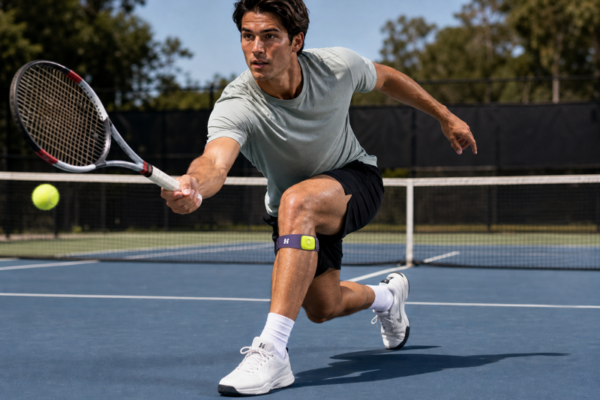
A tennis player pivots, lunges, and changes direction.
A hiker moves between flat ground, inclines, uneven terrain, and descents.
A gym user may move from walking to squatting, lunging, or jumping.
A person does not move in one identical pattern from start to finish. Yet a traditional sleeve, brace, or strap usually continues to apply the same amount of compression.
Why Fixed Compression Has Limits
Fixed compression is simple, familiar, and easy to use. But it cannot respond automatically when activity intensity changes.
For example, a conventional support product does not recognize:
Whether you are walking or running
Whether you are climbing or descending
Whether you are preparing to jump or have just landed
Whether you are accelerating, decelerating, or changing direction
The key point is simpler: a fixed level of compression is not the same as a system that responds to changing movement.
Static Compression vs. Dynamic Support
Feature
Static Compression
Dynamic Support
Support level
Fixed after fitting
Designed to change with activity
Adjustment
Manual
Automatic in adaptive systems
Movement awareness
Does not detect movement type
Uses movement data in intelligent systems
Best fit
Steady, predictable activity or simple support needs
Activities with frequent changes in speed, direction, or intensity
Examples
Sleeves, conventional braces, traditional straps
Sensor-based adaptive support systems
Why This Matters for Running, Hiking, and Sports
A runner on a flat road, a hiker descending uneven terrain, and a basketball player cutting across the court may all want knee support—but they do not move the same way.
Even within one activity, movement can change in seconds.
A runner may begin with a slow walk, transition into a steady pace, and then sprint. A hiker may move from level ground to uneven steps. A basketball player may go from standing still to jumping, landing, and pivoting.
Traditional knee support can still be a practical choice for many people. However, it does not change automatically when the wearer’s activity changes.
This is where adaptive support becomes relevant: not because every person needs more compression, but because support requirements may not be identical throughout an activity.
An Emerging Approach: Adaptive Knee Support
Adaptive knee support is designed around movement awareness.
Instead of relying only on a manually selected level of compression, an adaptive system uses sensors and software to identify movement changes and adjust support accordingly.
The goal is not simply to increase pressure. It is to deliver support more selectively as activity demands change.
This approach is especially relevant for people who regularly move between different types of activity, including:
Running outdoors
Strength training
Hiking on changing terrain
Court sports
Daily walking and commuting
Mixed workouts that include squats, jumps, and directional changes
How Xtand Orion Approaches Dynamic Support
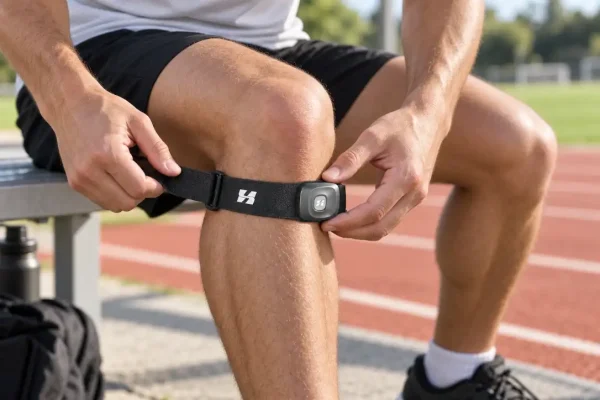
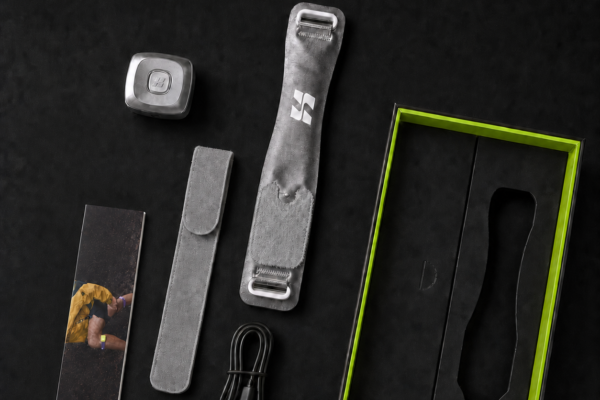
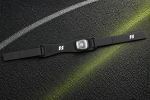
Xtand Orion is an intelligent patella strap designed for active movement.
According to its product specifications, Orion uses built-in motion sensors and AI-powered motion recognition to identify movements such as walking, running, sprinting, jumping, and squatting. Its adaptive compression system is designed to adjust compression according to activity, rather than relying on one fixed manually selected setting. Explore Xtand Orion’s product details
Orion is designed around a simple principle: Support should respond to the way you move.
The product can operate independently, while the optional Xtand app provides movement tracking and activity insights. The product page lists adaptive compression from 0–50 kPa and an estimated battery life of four to six hours, depending on use. See full specifications.
Choosing the Right Type of Knee Support
The right choice depends on your activity, comfort, fit, and reason for using support.
A traditional sleeve, brace, or patella strap may be a suitable option if you want simple, lightweight, fixed compression for a specific activity.
Adaptive support may be worth considering if you want a product designed to respond as your movement changes throughout the day or workout.
When comparing options, consider:
Where you want support
How much coverage you prefer
Whether your activity is steady or highly variable
No. Static compression can be useful for many people and activities. Its main limitation is that it remains at the same level as movement demands change.
Is more compression always better?
No. More pressure does not automatically mean better support or comfort. The right fit and level of support depend on the product, activity, and individual wearer.
What is dynamic knee support?
Dynamic knee support refers to a system designed to change its support response as movement changes. Some intelligent products use sensors and motion-recognition technology to do this automatically.
Can a knee sleeve adjust support while I move?
Most conventional knee sleeves provide fixed compression and do not automatically change their support level during activity.
Is Xtand Orion a traditional knee brace?
No. Xtand Orion is an intelligent patella strap. It is designed to provide adaptive compression in a compact format rather than the full coverage of a traditional knee brace.
Can knee support products treat an injury?
No. A knee support product does not diagnose, cure, or replace treatment for an injury. Seek professional guidance for severe, persistent, worsening, or injury-related knee symptoms.
Static knee compression can offer a simple and familiar form of support. But real movement is constantly changing.
Walking, running, hiking, jumping, landing, and changing direction do not create the same demands on the body. For people who want support designed to respond to those changes, adaptive technology offers a different approach.
Xtand Orion represents that next step: AI-powered dynamic support designed to move with you.
Correct placement is the first step toward a secure and comfortable experience with Xtand Orion.
The strap should sit approximately 3–5 cm below the kneecap, with the logo facing forward and the AI...
A hike can ask very different things of your body.
Uphill sections test strength and endurance. Flat sections let you settle into a rhythm. But downhill terrain often becomes the real test of contr...
Your body does not move the same way twice.
When you walk, run, jump, climb, or train, your speed, direction, body position, and movement intensity can change from one moment to the next.
Tradit...
Adaptive knee support is a wearable support approach designed to respond to changing movement conditions.
Unlike a traditional knee sleeve, knee brace, or patella strap that provides one fixed leve...
Choosing the right knee support can feel confusing. A patella strap and a knee brace may both be used during sports, training, or everyday movement, but they are designed to support the knee in differ...

 Quick answer: Choose Auto Mode when you want Orion to adjust its support response as your movement changes. Choose Manual
 Quick answer: Measure your leg 3–5 cm below the kneecap. If the circumference is between 34 and 45 cm, it
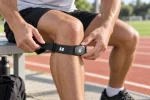 Quick fit: 3–5 cm below the kneecap, logo forward, AI module on the outer side, buckle secure, and one finger
 Activity Why the strap may shift Running Repeated flexion and extension Squatting Deeper knee bending changes leg shape Lunging Split
 The squat is one of the most widely used lower-body exercises.As you descend, your knees and hips flex while your