Your pace changes, your stride changes, and the demands of each step can change with them. An easy jog, a tempo run, a hill session, and a sprint workout may all feel completely different—even when they happen in the same run.
That raises a practical question: should your knee support feel exactly the same throughout every type of running?
Traditional knee supports, including compression sleeves, knee braces, and patella straps, typically provide a fixed level of compression or stability. That can be useful for runners who prefer a consistent feeling of support. But running itself is dynamic, and some people may prefer support that can respond as their movement changes.
Different Speeds Create Different Running Demands
As pace changes, so does the way you move.
At an easy running pace, your stride is usually more controlled and repeatable. As you accelerate, your legs cycle faster, force is applied over a shorter period, and your knees move through repeated flexion and extension at a higher rate.
Common running scenarios can feel very different:
Running condition
What changes
Easy run
Steady pace and controlled movement
Tempo run
Faster turnover and greater effort
Sprinting
Explosive acceleration and rapid movement
Uphill running
More propulsion effort with each stride
Downhill running
Different braking and landing demands
Uneven trails
More variation in footing and body position
Running research supports the idea that pace changes knee mechanics—but it is not as simple as saying “faster is always worse.” One study found that faster speeds increased peak patellofemoral joint force and stress per step, while cumulative loading over a fixed distance could be lower because fewer steps were needed. In other words, running load changes with speed in more than one way. PubMed study
Hill running also changes lower-limb mechanics compared with level running, which is one reason an uphill mile and a downhill mile can place very different demands on the body. Running biomechanics review
Why Fixed Knee Support May Feel Limited During Running
Fixed-support products are designed to provide a consistent level of compression or reinforcement.
For example:
A compression sleeve applies steady pressure around the knee.
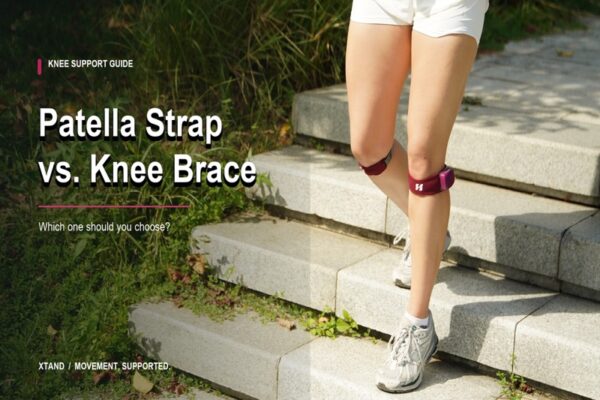
A patella strap applies targeted pressure below the kneecap.
A traditional knee brace may provide a more structured feeling of stability.
These products can be practical, simple, and effective for people who want the same support sensation throughout an activity.
However, fixed support does not know whether you are warming up, cruising at an easy pace, sprinting for a finish line, or running downhill. It remains at the level you set before the workout.
That does not make fixed support a poor choice. It simply means that it follows a one-setting approach to an activity that constantly changes.
Adaptive Knee Support Takes a Different Approach
Adaptive knee support is built around a different idea: Your movement changes, so your support may be able to change with it.
Rather than delivering the same response throughout a run, an adaptive system is designed to recognize changes in movement and adjust its support response accordingly.
Fixed support
Adaptive support
One manually selected level
Designed to respond to movement changes
Consistent compression
Variable response based on activity
Simple, familiar approach
Technology-led approach
Does not distinguish between running phases
Designed to account for changing movement patterns
For runners, the potential benefit is not necessarily “more” support. It is a support experience that is intended to be more responsive during changing conditions.
How Xtand Orion Is Designed for Changing Running Conditions
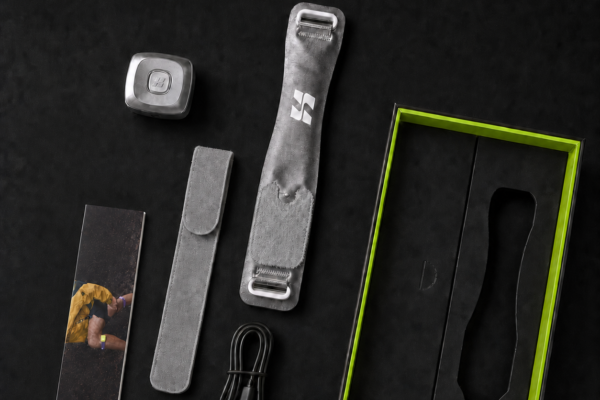
Xtand Orion is an AI-powered dynamic knee support designed for movement that does not stay constant.
According to Xtand, Orion uses sensors to monitor factors such as knee angle, speed, and acceleration. Its motion-recognition system is designed to identify activities including walking, running, sprinting, jumping, and squatting, then adjust compression in response to movement. Explore Xtand Orion
For a runner, that could mean moving through a workout with support designed to respond as activity changes:
Beginning with a warm-up
Settling into an easy run
Increasing pace for a tempo segment
Climbing or descending hills
Accelerating for intervals or sprints
Returning to a recovery walk
Xtand Orion is designed around a simple principle: support should move with you instead of asking you to adapt to a fixed setting.
Choosing Knee Support for Running
The best option depends on your goal, comfort preferences, movement type, and any guidance you have received from a qualified clinician.
A fixed knee sleeve, brace, or patella strap may suit runners who want a familiar, consistent support feel. An adaptive option may appeal to runners whose workouts include changing pace, hills, trail conditions, or mixed activities.
No knee-support product replaces gradual training progression, appropriate footwear, recovery, strength work, or professional evaluation when needed.
If you have severe pain, swelling, instability, locking, an inability to bear weight, or symptoms after an acute injury, seek advice from a qualified healthcare professional.
자주 묻는 질문
Do faster runs always require more knee support?
Not necessarily. Faster running changes movement mechanics, but every runner’s body, training history, and comfort needs are different. More support is not automatically better.
슬개골 스트랩을 착용하고 달려도 되나요?
Many runners use patella straps for a targeted support feeling below the kneecap. Proper fit and comfort matter, and persistent symptoms should be assessed by a qualified clinician.
What is the difference between a running knee sleeve and adaptive knee support?
A knee sleeve usually provides consistent compression. Adaptive knee support is designed to recognize movement changes and adjust its response as activity changes.
Does Xtand Orion replace strength training or injury treatment?
No. Xtand Orion is a movement-support product, not a substitute for medical diagnosis, rehabilitation, strength training, or professional care.
Does Xtand Orion need an app during every run?
According to Xtand, the device can operate independently, while the companion app can provide access to settings and movement data. See product details
Support That Keeps Up With Your Run
Runners do not move at one speed, on one surface, or in one pattern.
Your pace changes. Your terrain changes. Your stride changes.
For runners who want a more responsive approach than fixed compression alone, Xtand Orion is designed to bring AI-powered dynamic support to every stage of movement.
This article is for general educational purposes only and is not medical advice. Consult a qualified healthcare professional for diagnosis, treatment, or persistent knee symptoms.
Adaptive knee support is a wearable support approach designed to respond to changing movement conditions.
Unlike a traditional knee sleeve, knee brace, or patella strap that provides one fixed leve...

 Quick answer: Choose Auto Mode when you want Orion to adjust its support response as your movement changes. Choose Manual
 Quick answer: Measure your leg 3–5 cm below the kneecap. If the circumference is between 34 and 45 cm, it
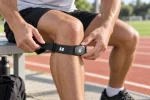 Quick fit: 3–5 cm below the kneecap, logo forward, AI module on the outer side, buckle secure, and one finger
 Activity Why the strap may shift Running Repeated flexion and extension Squatting Deeper knee bending changes leg shape Lunging Split
 The squat is one of the most widely used lower-body exercises.As you descend, your knees and hips flex while your