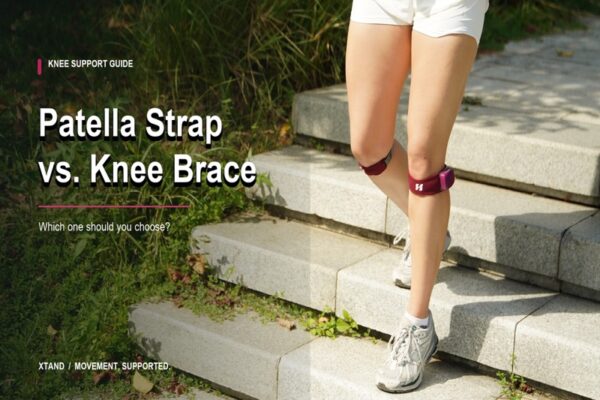
Adaptive knee support is a wearable support approach designed to respond to changing movement conditions.
Unlike a traditional knee sleeve, knee brace, or patella strap that provides one fixed level of compression, an adaptive system is designed to recognize changes in activity and adjust its support response accordingly.
In simple terms: Your movement changes → Your support changes.
This concept is especially relevant for active people. Walking, running, hiking, squatting, jumping, landing, and changing direction do not place identical demands on the body. A support product that stays at one setting throughout an activity cannot distinguish between those movements.
Adaptive knee support is designed around a different idea: support should respond to how you move.
How Does Traditional Knee Support Work?
Traditional knee support products generally rely on fixed compression, structure, or reinforcement.
For example:
A compression sleeve applies consistent pressure around the knee.
A 슬개골 밴드 applies targeted pressure below the kneecap.
A traditional knee brace may provide broader coverage and a more supported feel around the joint.
These products can be practical, familiar, and useful for many people. However, once they are fitted, their support level usually remains the same until the user manually adjusts or removes them.
Why Real Movement Is Dynamic
During a single workout, your body may move through several different activity states.
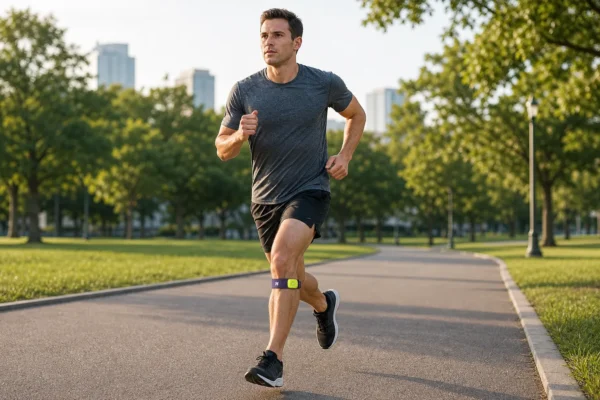
A runner may begin with a warm-up walk, transition into a steady pace, sprint, slow down, and climb or descend a hill. A basketball player may accelerate, stop, jump, land, and change direction in seconds. A hiker may shift between flat terrain, uneven ground, steps, and descents.
Movement demands can vary based on:
Speed
Direction
Terrain
Body position
Activity intensity
Impact and landing patterns
A conventional knee-support product does not know whether you are standing still, walking, running, or landing from a jump. It continues to provide the same level of compression or structure throughout the activity.
Static Support vs. Adaptive Knee Support
기능
Static Knee Support
Adaptive Knee Support
Support response
피팅 후 수정됨
Designed to change with movement
조정
설명서
Automatic in intelligent systems
움직임 인식
Does not detect activity type
Uses movement data to identify activity changes
Typical examples
Sleeves, traditional braces, standard patella straps
센서 기반 적응형 지원 시스템
가장 적합한
Simple or predictable support needs
Activities with changing speed, direction, or intensity
Static support is not inherently inferior. It is simply designed for a different type of use.
Adaptive support is intended for people who want a support system that can respond as their activity changes.
How Does Adaptive Knee Support Work?
Adaptive knee support systems may combine several technologies:
Motion sensors
Motion-recognition software
Intelligent algorithms
Adjustable compression or tension systems
Optional app-based activity tracking
The exact technology varies by product. Generally, sensors collect movement data such as angle, speed, acceleration, or movement pattern. The system then uses that information to determine whether the support response should change.
Wearable sensor research shows that soft, body-worn systems can track knee motion during activities such as walking, jogging, and knee-flexion exercises. However, motion tracking alone should not be confused with proof that any support product treats injury or improves clinical outcomes. Read an example of wearable knee-motion monitoring research.
The goal of adaptive support is not simply to create more pressure. It is to create a more responsive support experience.
What Makes Adaptive Support Different?
The difference is not only about compression. It is about context.
A fixed-compression strap applies the same support whether you are walking through a parking lot or making a high-intensity cut during a game.
An adaptive system is designed to recognize that these are different movement conditions.
This means adaptive support may be relevant for people who regularly do activities such as:
Outdoor running
Gym training
변화하는 지형에서의 하이킹
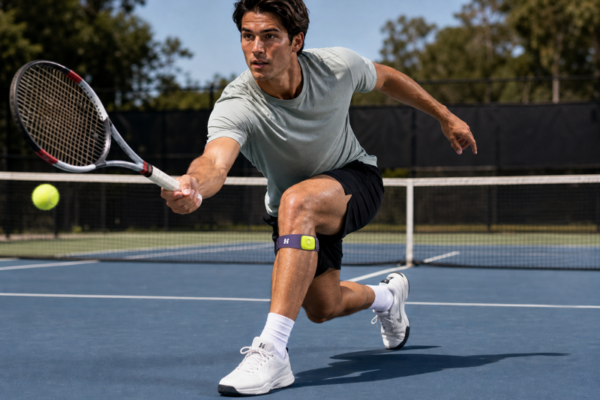
Basketball, tennis, pickleball, or volleyball
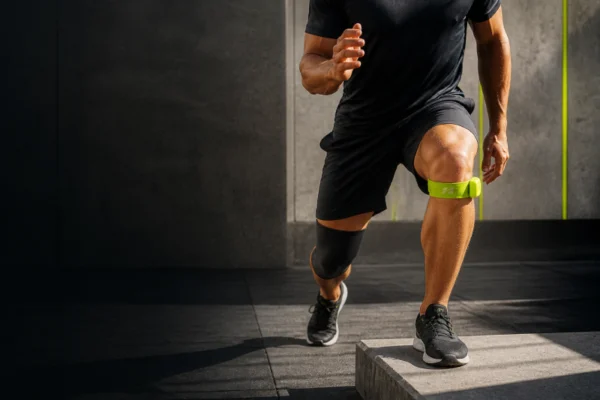
Mixed workouts involving squats, jumps, and lunges
Active daily routines that shift between walking and higher-intensity movement
Adaptive support is not a replacement for good training habits, recovery, medical evaluation, or rehabilitation when those are needed. It is a different product design approach for active movement.
Xtand Orion: An Example of Adaptive Knee Support
엑스탠드 오라이언은 활동적인 움직임을 위해 설계된 스마트 슬개골 스트랩입니다.
According to its product specifications, Orion uses built-in motion sensors and AI-powered motion recognition to identify movements such as walking, running, sprinting, jumping, and squatting. Its adaptive compression system is designed to adjust support based on the activity rather than relying on one fixed setting.Xtand Orion 탐색하기.
The product is designed around one principle: Support should adapt to you, not force you to adapt to your support.
Xtand Orion can operate independently, and its optional companion app provides activity tracking and movement insights. The product page lists adjustable compression from 0–50 kPa and an estimated battery life of four to six hours, depending on activity and use. View the full product specifications.
Is Adaptive Knee Support Right for You?
Adaptive knee support may be worth considering if your activity often changes in pace, direction, terrain, or intensity.
You may prefer adaptive support if you:
Move between walking, running, training, and sports
Want a support product designed to respond to activity changes
Prefer automatic adjustment over manual tightening
Want a low-profile alternative to a larger knee brace
Use knee support during dynamic activities rather than only at rest
A traditional sleeve, brace, or patella strap may still be a good choice if you prefer simple fixed compression, broader coverage, or a product designed for a specific support need.
Adaptive knee support is a movement-aware support approach designed to adjust its response as activity conditions change. Some systems use sensors and software to recognize movement patterns and adjust compression or tension automatically.
Is adaptive knee support the same as a knee brace?
Not necessarily. “Adaptive knee support” describes how a product responds to movement. It may take the form of a strap, sleeve, brace, or another wearable design.
Does adaptive knee support provide more compression?
Not always. The goal is not simply to provide more compression. It is to provide a support response designed to change with activity.
Can a traditional knee sleeve adapt while I move?
Most traditional knee sleeves provide fixed compression and do not automatically adjust their support level during activity.
Is adaptive knee support medical treatment?
No. Adaptive knee support products do not diagnose, cure, or replace treatment for an injury or medical condition. Seek guidance from a qualified healthcare professional for severe, persistent, worsening, or injury-related knee symptoms.
Adaptive knee support is a new approach to wearable support for people whose movement is constantly changing.
Traditional sleeves, braces, and patella straps provide fixed support. Adaptive systems are designed to use movement data to respond differently when activity changes.
For active people, the future of knee support is not necessarily about more pressure. It is about smarter, more responsive support.
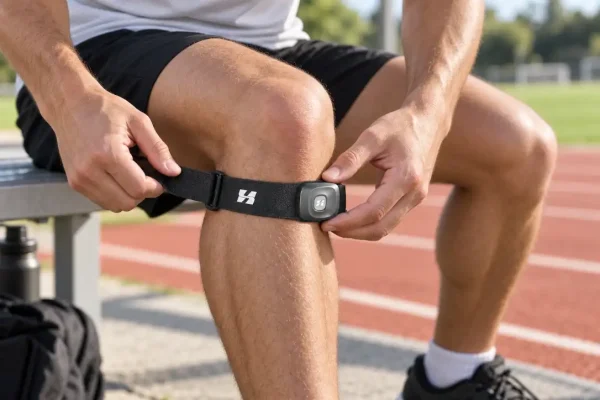
Correct placement is the first step toward a secure and comfortable experience with Xtand Orion.
The strap should sit approximately 3–5 cm below the kneecap, with the logo facing forward and the AI...
Running is never just one movement.
Your pace changes, your stride changes, and the demands of each step can change with them. An easy jog, a tempo run, a hill session, and a sprint workout may all...
Your body does not move the same way twice.
When you walk, run, jump, climb, or train, your speed, direction, body position, and movement intensity can change from one moment to the next.
Tradit...

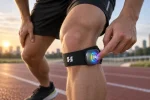 Quick answer: Choose Auto Mode when you want Orion to adjust its support response as your movement changes. Choose Manual
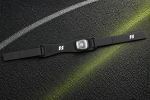 Quick answer: Measure your leg 3–5 cm below the kneecap. If the circumference is between 34 and 45 cm, it
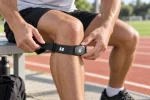 Quick fit: 3–5 cm below the kneecap, logo forward, AI module on the outer side, buckle secure, and one finger
 Activity Why the strap may shift Running Repeated flexion and extension Squatting Deeper knee bending changes leg shape Lunging Split
 The squat is one of the most widely used lower-body exercises.As you descend, your knees and hips flex while your