Xtand Orion Proを2台購入すると、20%が割引になります

ブログ
目次
Basketball is not a steady, predictable sport.
You sprint down the court, stop on defense, jump for a rebound, land after a shot, and change direction in a split second. One possession can include several completely different movements—and your knees are involved in all of them.
That is why basketball knee support is about more than constant compression. For some players, the ideal support experience is one that feels comfortable during changing movement, rather than one that stays exactly the same all game.
Quick Answer: What Does Basketball Knee Support Need to Handle?
Basketball knee support should be chosen with the sport’s most common movement demands in mind:
- Jumping and explosive takeoff
- Landing and force absorption
- Sprinting and stopping
- Cutting and rapid changes of direction
- Repeated movement under fatigue
A knee sleeve, brace, or patella strap can provide a consistent feeling of support. Adaptive support takes a different approach by being designed to respond as movement changes.
Jumping: Explosive Movement Starts at the Knee
Jumping is central to basketball.
Whether you are shooting, rebounding, blocking, or attacking the basket, your lower body has to generate force quickly. Before takeoff, your knees bend as your hips, ankles, and leg muscles load. Then your legs extend rapidly to drive you upward.
This cycle happens repeatedly throughout a game:
Bend → load → jump → land → react → move again
Jumping and landing biomechanics involve the coordinated movement of the hips, knees, and ankles. Research also shows that training can improve movement strategies used during these tasks. Jump and landing biomechanics review
For basketball players, knee support should not unnecessarily interfere with natural knee flexion and extension during these movements.
Landing: The Movement That Comes Right After the Jump
A jump is only half the action. Every jump ends with a landing.
After a rebound, layup, or contested shot, your body has to absorb downward force and regain control before the next play begins. In basketball, there is rarely time to pause after landing.
You may land and immediately need to:
- Sprint toward the basket
- Defend an opponent
- Plant and change direction
- Jump again
- Stop suddenly
Landing quality matters, but it is influenced by many factors beyond knee support, including strength, fatigue, technique, footwear, court conditions, and prior injury history.
A support product should not be presented as a replacement for basketball-specific strength training, landing practice, or professional guidance when symptoms occur.
Cutting: When Direction Changes in an Instant
Basketball players rarely move in a straight line for long.
You may sprint toward the baseline, plant your foot, cut toward the basket, and then immediately stop or change direction again. On defense, you may react to an opponent’s movement with little warning.
During a cut, several things can change quickly:
- Direction
- Speed
- Body position
- Foot placement
- Knee angle
- Balance demands
Research on landing and cutting tasks found that higher-speed cutting can alter lower-limb biomechanics compared with slower cutting. Biomechanics study
That does not mean a knee-support product can prevent injuries. It does illustrate why basketball is a demanding movement environment—and why a fixed-support setting may not feel ideal to every player.
What Fixed Basketball Knee Support Can Do
Traditional knee sleeves, braces, and patella straps provide a fixed level of compression or reinforcement.
That can be useful for players who want a familiar, consistent feeling throughout practice or a game.
Fixed support | What it provides |
| Compression sleeve | Consistent pressure around the knee |
| Patella strap | Targeted support below the kneecap |
| Traditional knee brace | A more structured support feel |
However, fixed support stays at the same setting during warm-ups, sprinting, jumping, landing, and cutting.
This does not make it ineffective. It simply means that the support does not change automatically as your activity changes.
Why Adaptive Knee Support Offers a Different Approach
Adaptive knee support is designed around a simple idea:
Different movements may call for a different support response.
Instead of providing the same level of compression throughout an entire workout or game, an adaptive system is designed to respond to movement changes.
Fixed support | Adaptive support |
| One manually selected level | Designed to respond to movement changes |
| Same compression throughout play | Variable support response |
| Familiar and straightforward | Technology-led approach |
| Does not change with activity | Designed for dynamic activity patterns |
For basketball players, this may be appealing because the sport itself constantly shifts between low-intensity movement and explosive action.
How Xtand Orion Is Designed for Basketball Movement
Xtand Orion is an AI-powered dynamic knee support designed for active movement.
According to Xtand, Orion uses motion sensors to monitor knee angle, speed, and acceleration. Its motion-recognition system is designed to recognize activities including walking, running, sprinting, jumping, and squatting, then automatically adjust compression based on activity. Explore Xtand Orion
For basketball, that means Orion is designed for the movement transitions players experience during a session:
- Standing and moving during warm-up
- Accelerating into a sprint
- Jumping for rebounds or shots
- Returning to lower-intensity movement
- Repeating high-energy actions throughout play
The goal is not simply more compression. It is a more responsive support experience designed to move with the game.
Do Knee Supports Prevent Basketball Injuries?
No knee support should be treated as a guarantee against injury.
Evidence on preventive knee bracing is mixed and depends on the type of brace, movement, athlete, and outcome being studied. A systematic review found some possible biomechanical effects in certain movement planes, while results in other areas remained inconclusive. Systematic review
For basketball players, a better approach is to view knee support as one part of a broader routine that may include:
- Progressive strength training
- Jump and landing technique
- Proper warm-ups
- Recovery and workload management
- Appropriate footwear
- Medical guidance for pain, instability, or injury
Move With the Game
Basketball does not give you time to think through every movement.
You react. You sprint. You jump. You land. You cut. Then you move again.
Xtand Orion brings AI-powered dynamic knee support to active movement, designed to adapt as your activity changes.
From the first sprint to the final possession, your game keeps moving.
よくある質問
What type of knee support is best for basketball?
The best choice depends on your comfort preferences, movement needs, and professional guidance. A sleeve, brace, or patella strap may provide a consistent support feel, while adaptive support is designed for changing movement conditions.
Can I wear a patella strap while playing basketball?
Many athletes wear patella straps during jumping sports. Fit and comfort are important. If you have persistent pain, swelling, instability, or symptoms after an injury, consult a qualified healthcare professional.
Does Xtand Orion recognize basketball?
Xtand Orion is designed to recognize movement patterns such as running, sprinting, and jumping. Xtand does not present it as a product that separately identifies every basketball action, such as a specific cut or landing.
Does knee support replace strength or landing training?
No. Knee support does not replace basketball-specific strength work, warm-ups, landing practice, rehabilitation, or medical assessment.
This article is for general educational purposes only and is not medical advice. Seek guidance from a qualified healthcare professional for severe pain, swelling, locking, instability, inability to bear weight, or symptoms following an acute injury.
最新の投稿
- Auto Mode vs Manual Mode on Xtand Orion
 Quick answer: Choose Auto Mode when you want Orion to adjust its support response as your movement changes. Choose Manual
 - Xtand Orion Size Guide
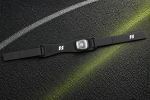 Quick answer: Measure your leg 3–5 cm below the kneecap. If the circumference is between 34 and 45 cm, it
 - How to Wear Xtand Orion Correctly
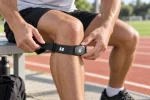 Quick fit: 3–5 cm below the kneecap, logo forward, AI module on the outer side, buckle secure, and one finger
 - Why Your Knee Strap Slips During Exercise—and How to Fix It
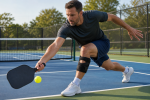 Activity Why the strap may shift Running Repeated flexion and extension Squatting Deeper knee bending changes leg shape Lunging Split
 - Knee Support for Squats, Lunges, and Strength Training
 The squat is one of the most widely used lower-body exercises.As you descend, your knees and hips flex while your
最近のコメント
表示できるコメントはありません。